

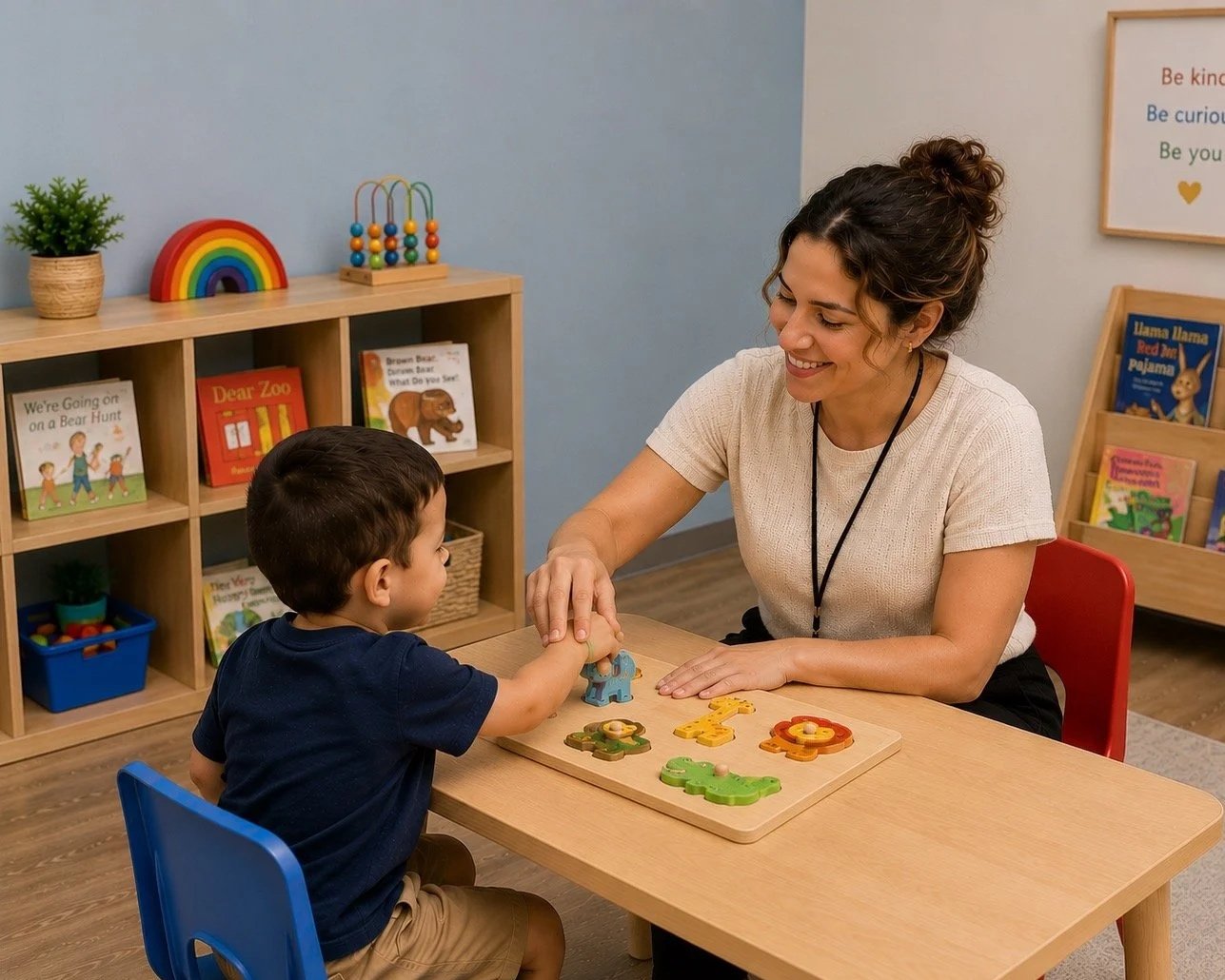
What is Applied Behavior Analysis (ABA)?
Applied Behavior Analysis (ABA) is the understanding and improvement of human behavior. ABA is a natural-science approach to identifying environmental variables that influence socially significant behaviors. ABA is used to reduce maladaptive behaviors such as tantrums, aggression, and self-injurious behavior and to increase functional and communication skills in children with developmental disabilities. It is an evidence-based and proven treatment for children with behavioral and developmental delays.
Blossom Behavior Therapy provides a 1 child-to-therapist ratio, which is the model in ABA therapy.
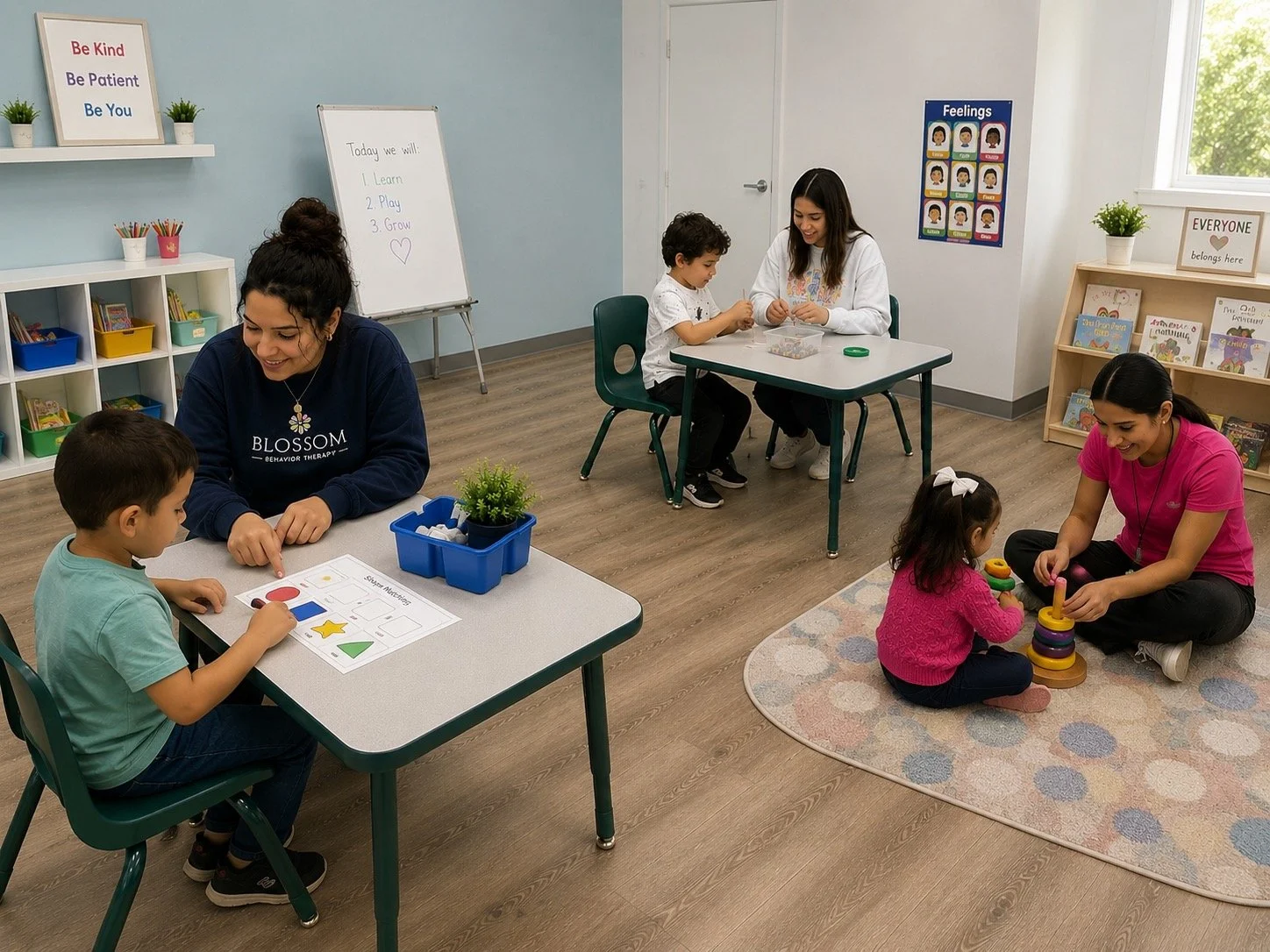
ABA Early Intervention Program
Clinic Based Full-Day Program
Ages 1.5- Up
About 25-35 hours a week.
Blossom’s Intensive early intervention program is designed to address developmental challenges in young children. Typically implemented before the age of five, this approach involves frequent, individualized sessions that focus on teaching essential skills, such as communication, social interaction, and adaptive behavior. Utilizing data-driven techniques, therapists work to reinforce positive behaviors while decreasing maladaptive ones, fostering significant developmental gains. The program often incorporates family involvement, ensuring that strategies are integrated into daily routines and promoting a supportive environment for the child's growth.
In intensive early intervention using Applied Behavior Analysis (ABA), several key developmental domains are targeted to promote comprehensive growth in young children.
1. Communication Skills: This domain focuses on enhancing both verbal and non-verbal communication. Interventions aim to develop language skills, including vocabulary acquisition, sentence structure, and pragmatic language use, as well as alternative communication methods like sign language or communication devices for non-verbal children.
2. Social Skills: Social development is crucial for fostering interactions with peers and adults. Interventions target skills such as turn-taking, sharing, understanding social cues, and building friendships. Activities often involve role-playing and guided interactions to encourage appropriate social behaviors.
3. Adaptive Behavior: This area emphasizes practical life skills that enable children to function independently. Skills targeted may include self-care routines (like dressing and toileting), following directions, and understanding personal safety. The goal is to help children navigate daily activities with increased independence.
4. Cognitive Skills: Early intervention also addresses cognitive development, promoting problem-solving, memory, and attention. Therapists may use structured play and instructional activities to enhance critical thinking and cognitive flexibility.
5. Motor Skills: Both fine and gross motor skills are important for overall development. Interventions may include activities that enhance coordination, balance, and dexterity, which are essential for tasks such as writing, drawing, and participating in physical activities.
6. Emotional Regulation: Teaching children how to recognize and manage their emotions is vital. Interventions focus on developing coping strategies, understanding feelings, and expressing emotions appropriately, which helps improve overall emotional well-being.
By targeting these interconnected domains, intensive early intervention in ABA aims to foster holistic development, ultimately leading to improved quality of life and greater success in social and academic settings.
ABA Daycare
or
ABA in School Services
ABA therapy in schools involves applying principles of Applied Behavior Analysis to support students.The approach is tailored to meet individual needs, focusing on promoting positive behaviors, enhancing communication skills, and fostering academic success.In a school or daycare setting, Blossom collaborates with teachers and staff to develop individualized education plans (IEPs) that incorporate specific behavioral goals. We use techniques such as reinforcement to encourage desired behaviors, while also implementing strategies to reduce challenging behaviors. This might include creating structured environments, using visual supports, and integrating social skills training into daily routines.Data collection is a critical aspect of ABA therapy, allowing us to track progress and adjust interventions as needed. By embedding ABA strategies into classroom practices, Blossom aim to create inclusive environments where all students can thrive, enhancing both academic and social outcomes.Limitations:1. Resource Constraints: Schools may have limited resources, including staff training and availability of materials.2. Varied Expertise:Not all educators have extensive training in ABA principles, which can affect the quality of implementation.3. Time Restrictions: Schools often operate under strict schedules, which may limit the time available for individualized ABA services.
Afterschool
Social Skills
Afterschool center based social skills is our program that is 1:1 child to therapy ration where Blossom targets socialization skills such as interpersonal relationships, play, and leisure skills as well as behavior reduction goals. Our program run 2-6pm.All services are individualized to the client.
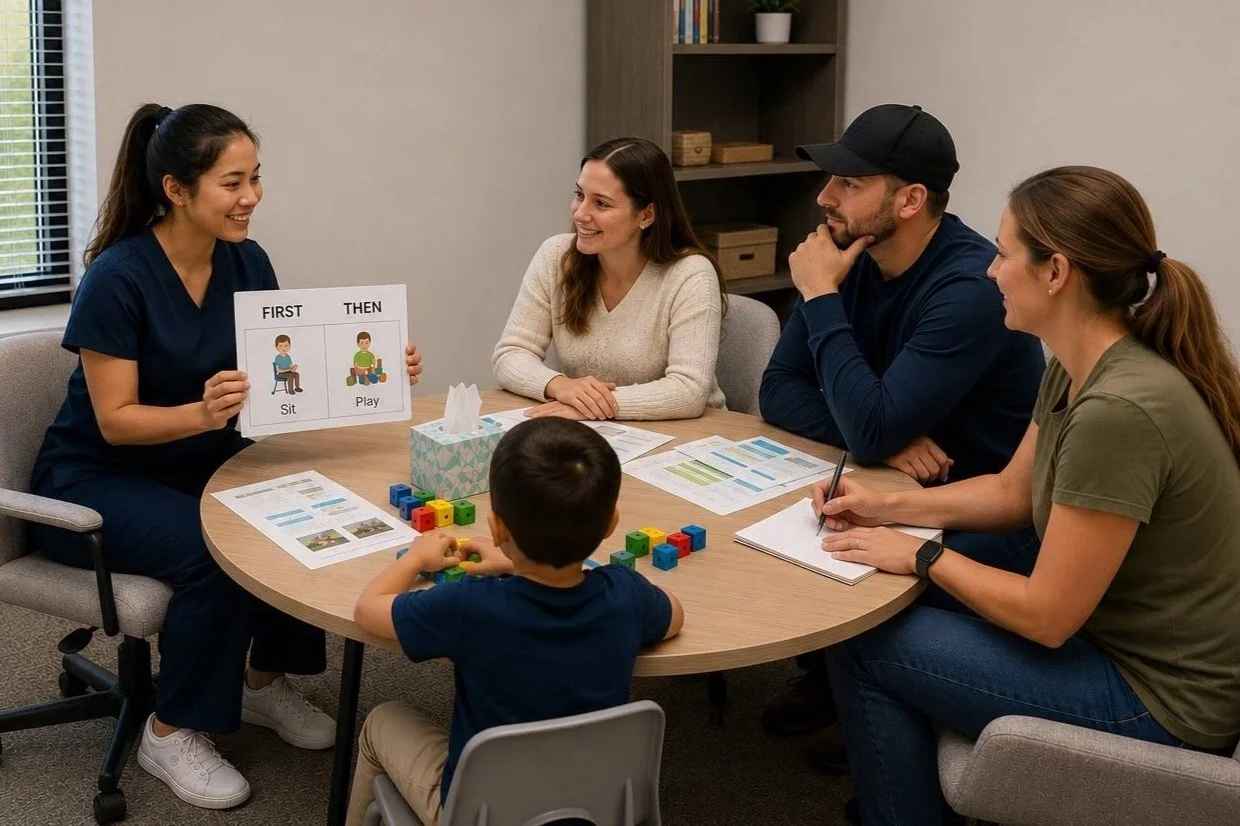
Parent Training
1-2 hours a week
Parent Training is a service where Blossom teaches the caregivers the foundation of Applied Behavior Analysis, this service is also used to collaborate with other providers, to be help caregivers with behavior reduction by teaching them interventions, and to teach caregivers how increase Activities of Daily Living Skills at home. All services are individualized to the client.
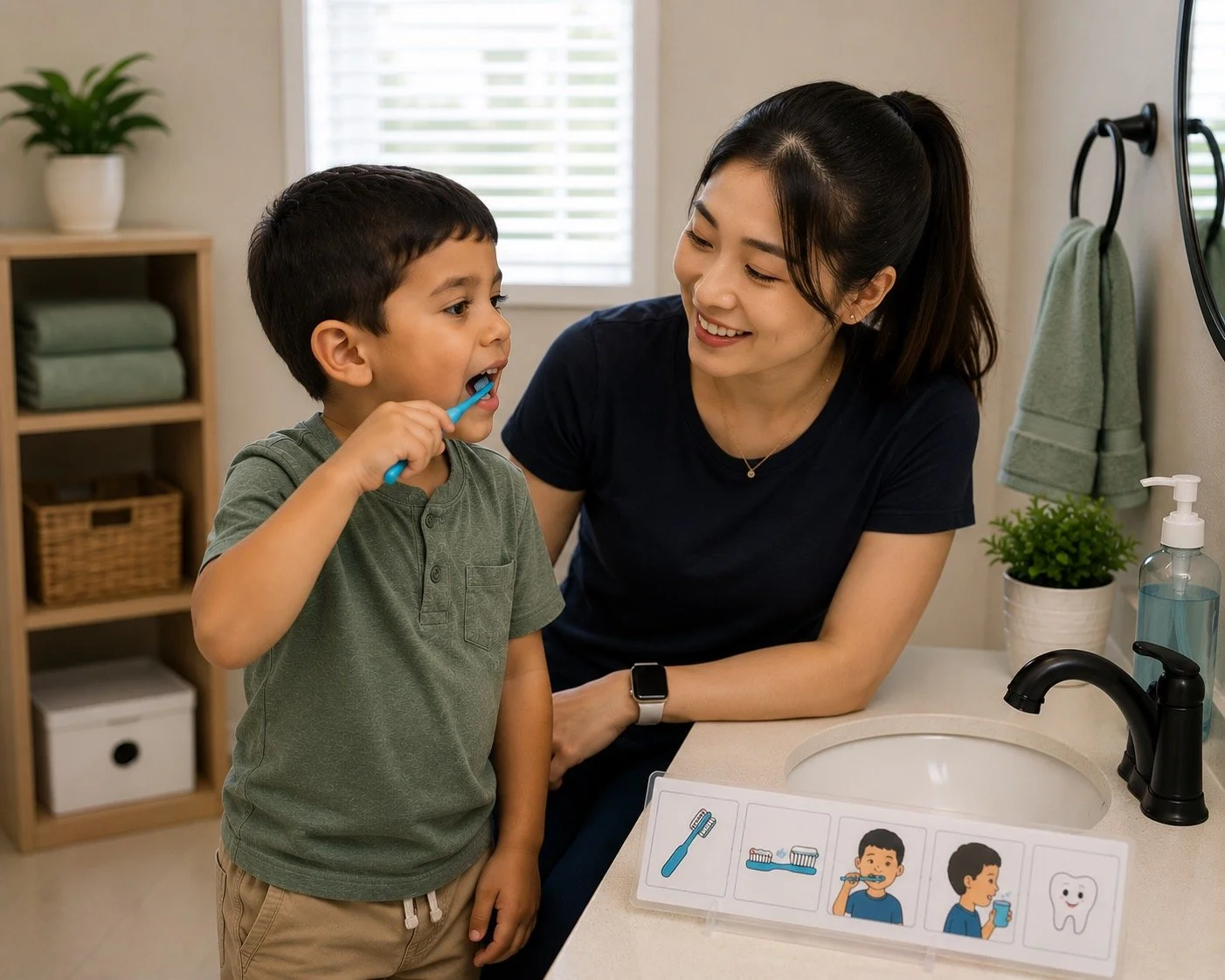
Home Therapy
10-15 hours a week
Home Therapy is a service with 1:1 child to therapist ratio. Blossom targets all developmental Domains where the child has deficit. Primary focusing on Daily Living Skills ( personal, domestic, community skills), communication (expressive & receptive), and socialization ( play & leisure skills). in addition to behavior reduction goals through consequence based interventions.All services are individualized to the client.
FAQs?
-
✔ Faster Learning Opportunities
Structured, distraction-reduced environments help children stay engaged and make meaningful progress.✔ Consistent Support & Supervision
Center-based therapy provides ongoing support from trained professionals in a therapeutic setting designed for learning.✔ Socialization & Peer Interaction
Children naturally practice communication, play, emotional regulation, and social skills with peers throughout the day.✔ Focused, Individualized Teaching
Sessions are intentionally structured around each child’s personalized goals and developmental needs.✔ Peer Modeling Opportunities
Children learn by observing and interacting with others in everyday situations and group activities.✔ Builds School Readiness Skills
Center routines help children develop skills like following directions, transitions, participation, and classroom independence -
Yes. While children work 1:1 with a therapist during sessions, our clinical team works collaboratively to support each child’s goals and progress. As skills develop, therapists may gradually rotate over time to help promote generalization across people, teaching styles, and environments. This helps children apply skills more naturally and confidently in everyday settings while still maintaining consistency and individualized support.
-
Blossom provides services for children ages 1.5 years and older. Programs and goals are individualized based on each child’s developmental needs and level of support.
-
Yes. We accept a variety of insurance plans. Please contact our team to verify benefits and coverage.
-
Therapy recommendations vary based on each child’s individual needs, goals, developmental level, and clinical recommendations following assessment.
-
Yes. We value collaboration and may work alongside schools, speech therapists, occupational therapists, physicians, and other providers to help support consistency across environments and maximize progress.